
To Swim or Not? Water Safety for Kids Guide
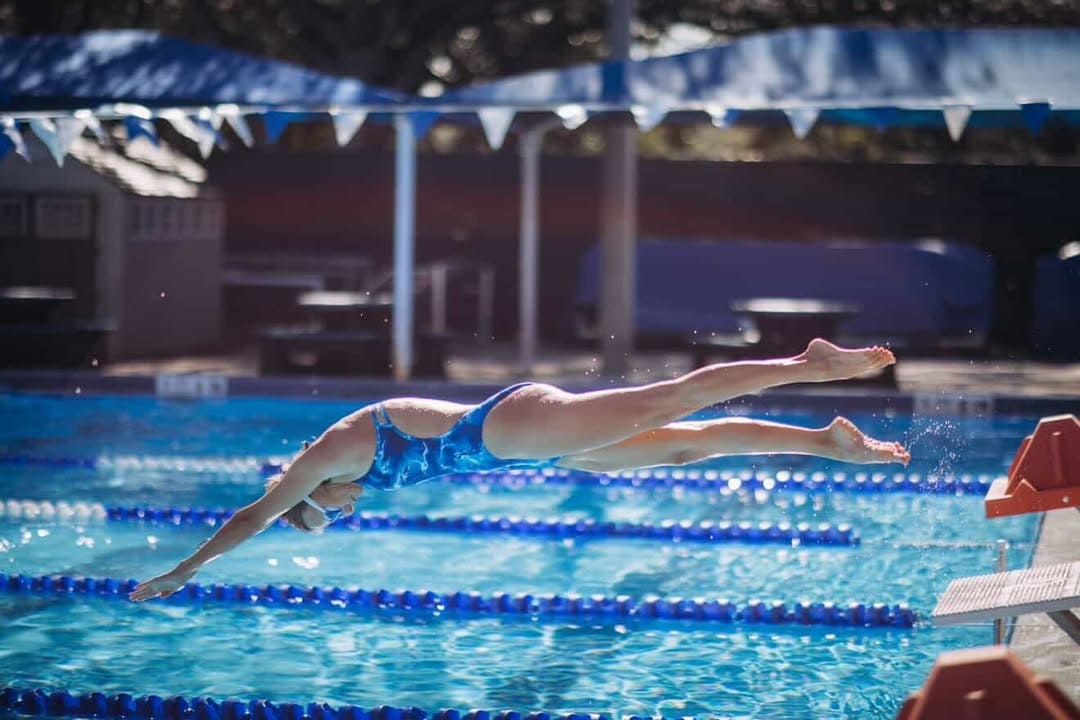
Living in Miami, swimming isn't just an after-school activity—it’s a non-negotiable life skill. We sat down with seasoned coach Anastasia Gainullina to cut through the noise and discuss what really matters when introducing your child to the water. Drawing from over a decade of experience teaching both kids and adults, Anastasia breaks down why proper technique is only half the battle, and how the right approach to the pool can build a lifetime of confidence and resilience.
If you asked me what sport I'd recommend for a child, I'd say swimming without hesitation. Because it's not just about muscles, technique, and graceful movements in the water. It's about safety, health, proper physical development, breath control, confidence, and falling in love with movement.
Swimming helps kids develop harmoniously because it engages the whole body without overloading joints. It teaches them not to fight their body, but to feel it. And that's its real value.
Getting Started
— What age do you recommend starting swimming lessons — and why that age specifically?
I recommend introducing kids to water very early, but it's important to understand: every age has different goals. This isn't about teaching a three-week-old to swim freestyle. It's about how water can support a child's development from the very beginning.
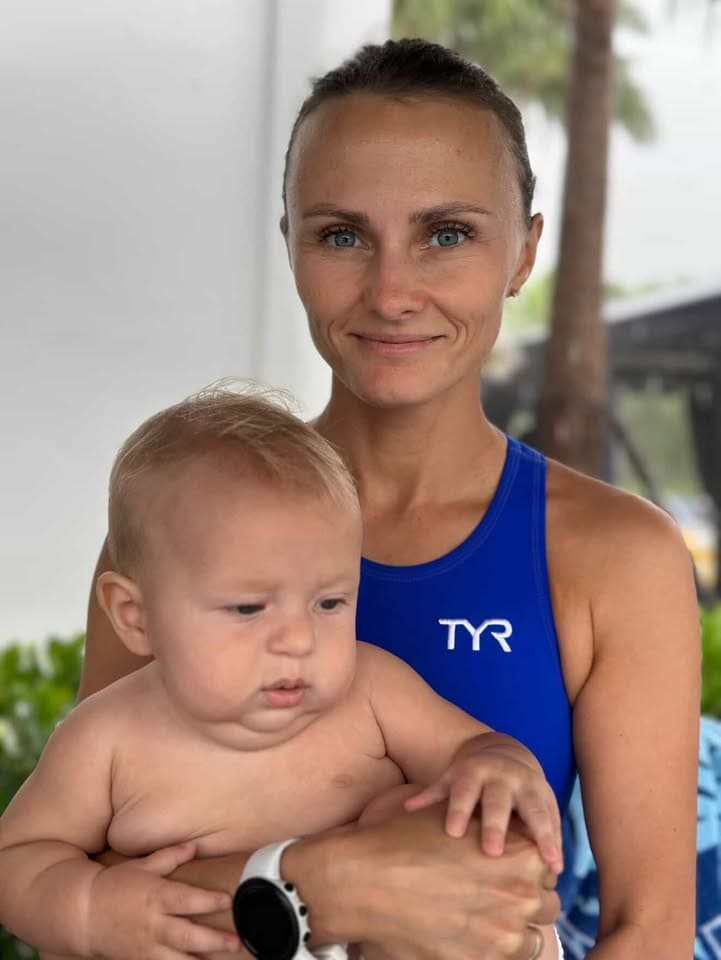
We start with babies at home in the bathtub at 3 weeks old, once the umbilical cord heals. At this age, water helps not so much with "learning to swim" as with connecting brain and body, gently engaging movement, helping them better sense their limbs and master motor milestones. Many parents don't realize how much the quality of early movement affects rolling over, crawling, first steps, and overall body control later on.
From 2.5–3 months, we can transition to a pool. At 6 months, babies can do group classes with a parent in the water, and by age 3, kids are usually ready for group lessons without parents in the pool. For private lessons, there are no restrictions on age or skill level.
And here's something I always tell parents: the earlier you start right, the less you have to fix later. If a child is comfortable with water from early on, feels safe, supported, and enjoys it, they typically have a much easier time both learning swim skills and developing motor coordination overall.
For me, there are three keys here: safety, motor development, and love of water. When these three things are built in childhood, the child moves into swimming very naturally, without tears, without struggle, without unnecessary tension.
— How can a parent tell when their child is ready for group lessons versus parent-child classes?
If we're talking about group lessons without parents in the water, the ideal age is 3 and up. But age itself isn't everything. We care less about the number and more about the child's state.
A child is usually ready for group when they can be in a new space without major panic, can somewhat accept contact with a new adult, can engage at least a little in the group process, and doesn't completely resist the water itself.
But I'm always honest: not every child needs to go straight to group just because they turned three. If a child is scared of water, won't put their face in, has had a negative experience, doesn't trust strangers, or reacts very strongly to new environments, it's better to start with private lessons.
And that doesn't mean something's "wrong" with the child. It means their nervous system isn't ready to learn in an environment with other kids, noise, waiting for turns, and less individual attention. And when the nervous system is anxious, learning goes poorly.
I really don't like the approach: "They'll get used to it." No, they won't — they might just shut down. Then parents wonder why their kid doesn't want to go to the pool, refuses to wash their hair, and cries in the parking lot.
So my answer is: group is good when the child can already feel at least some support and safety in the water. If that's not there — individual first, then group. Not the other way around.
— What should you look for when choosing a pool and coach — three main criteria?
I'd split this into two parts: conditions and the person. Because you can have a beautiful pool but the wrong coach — and the lessons will still do harm. And vice versa.
First — water temperature. This is critical, especially for little ones. The younger the child, the warmer the water should be. In cold water, a child tenses up, their body goes into stress mode, and you won't get any quality learning. Parents often underestimate this, which is a mistake. If a child is physically uncomfortable, they won't learn — they'll just try to survive.
Second — proper starting zone. Beginner level should always start with steps, shallow area, feeling of support. If you're dragging a child straight into deep water and expecting them to copy what the coach does — that doesn't work. Fear paralyzes. In that moment, the child isn't absorbing new information. They're just trying to cope with anxiety.
So a good teaching pool isn't one that's "pretty in photos" — it's one where you can calmly, gradually, and safely introduce a child to water.
Third — the coach themselves. Here I'll say it straight: don't look for a coach who breaks a child for quick results. That's not the result you need at all.
A good kids' coach is visible from the first lesson. They know how to establish contact, love children rather than just "work with them," don't pressure, can explain through play, sense the child's state, don't rush to push them where they're not ready, understand that behind every movement in water is not just technique but nervous system work, breathing, and trust.
It's very important to me that a coach understands not just "how to teach swimming" but what's happening with the child's body in water. That's why I work not just with skill, but with body awareness, balance, breathing, and safety. That's the foundation of my Swim by Senses method, which I developed over years of work — and now our entire coaching team trains in it.
One more important point people rarely mention: if possible, I'd recommend choosing outdoor pools. The reason isn't just comfort. Indoor pools accumulate vapor from chemical compounds that form when water treatment products interact with cosmetics and what people bring on their skin. For kids, this can be an extra burden. So an outdoor pool is often a healthier choice.
Practice: Programs by Age
— How is the program structured for babies under 3 — is this actually swimming or just water adaptation?
I'd say it this way: it's already swimming, just not in the form adults are used to picturing. Many people think swimming starts when a child learns to move their arms and legs and somehow get across the water. But actually, it all starts much earlier — with how a child feels their body, how they breathe, how they react to water, and how they learn to relax in it.
Under age 3, water has completely different tasks. We're not chasing strokes or trying to get quick visible results as fast as possible. We work deeper: through water, we help the child build safety, brain-body connection, coordination, and proper movement patterns.
With the youngest ones, starting around 3 weeks, we work in the home bathtub once the umbilical cord heals. This is very gentle work where water helps the baby better sense their body, control their limbs, and activate correct movements. Then, around 2.5–3 months, we can transition to a pool.
To be completely honest, under 3 isn't "just adaptation" like many like to say. At this age, the foundation is being laid that later affects not only swimming but how a child moves in general. How they roll over, crawl, stand, maintain balance — all of this is directly connected to how well the body went through early developmental stages.
I look at water not just as a place where a child should get used to it and stop being afraid. For me, water is a development tool. And if you approach lessons properly at this age, later the child typically has far fewer problems both with learning swim skills and with their body overall.
— How do lessons differ for kids 3–5 years old versus the 6–10 group?
The difference is huge because these are two completely different ages and two different ways of perceiving the world.
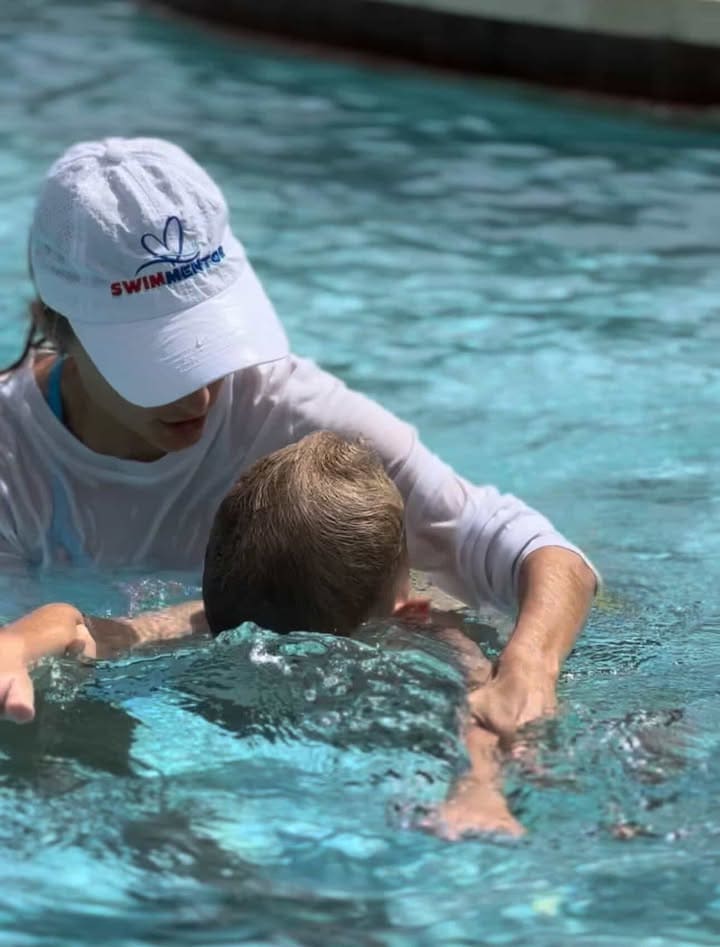
At 3–5, a child lives through play, imagery, emotion, and connection. At this age, they're not ready to absorb long explanations and dry technique. So teaching is built through play, story, imagination, and live connection with the coach. Our task here is to make water understandable, safe, and beloved for the child.
At this age, we're laying the foundation: breathing, balance, body position in water, trust, ability not to panic, navigate by the wall, and gradually move through play into real skills. Meaning first the child falls in love with water and learns to feel confident in it, and only then do we increase complexity.
At 6–10, kids are completely different. They have better attention, higher ability to hear instructions, repeat, analyze, and handle lesson structure. Here you can work much deeper on technique, coordination, swim strokes, and endurance.
But even at this age, I'm not a fan of the dry approach where you just make a child repeat the same thing over and over. A child still learns with their body, not just their head.
So in short: 3–5 is foundation through play, safety, and sensation; 6–10 is more conscious technique, but still without pressure and without violence to the body.
And the better the foundation was laid at 3–5, the easier swim strokes, breathing, and technique come to the child at an older age.
— When should you switch from group to private lessons?
I'd immediately remove the whole idea that after age 3 you need to choose one thing: either group or private lessons. They're not competitors. They're two different formats, and each solves its own task.
In group, one type of work happens: the child learns to be in process with other kids, hold attention, adapt to the general lesson structure, repeat, move in common rhythm. Private lessons solve a different task: there you can specifically address fear, remove a particular error, work deeper on technique, breathing, balance, and body awareness in water.
So I think the most productive system is when a child has 2 group lessons and 1–2 private ones. Group gives practice and environment, while private gives quality. And together this works much stronger than either alone.
If a child is scared of water, won't put their face in, has had negative experience, doesn't trust strangers, or gets very lost in the group process, it's better to start with private lessons. Because in anxiety, a child doesn't learn. They just try to cope with the situation.
For older kids, from 6 and up, especially if they're already training in competitive schools, I'll say it even more directly: you can't really work on technique in one group session. There's common pace, common workload, and lots of kids. So all serious mistakes, all the fine points about technique, breathing, and body position are truly solved only individually.
Very often the problem isn't that the child isn't trying. The problem is they don't feel their body, don't understand water, or can't relax at the right moment. And this isn't fixed by quantity of pool time. This is fixed only through deep individual work.
So my answer is simple: don't pit group against private. In the right combination, they give the best and most sustainable result.
Florida: Regional Specifics
— Florida means year-round pools or does open season still matter?
In Florida, swimming is definitely a year-round thing, and that's a huge advantage of our state. You don't need to wait for "season" to start teaching a child water. We train year-round, and this allows us not to take long breaks during which kids often lose skills or start getting anxious again.
But there are still weather conditions when lessons do get canceled. For example, if temperature drops below 60°F — most often in January — or if lightning is detected within 5 miles.
And here's an interesting point many people don't know: even in many indoor pools, training stops during thunderstorms. Not because lightning might strike the pool directly, but because it can easily hit pipes that run above ground and supply water. And water, as we know, conducts electricity very well. So safety rules require everyone to get out of the water.
Storm season for us is usually August through October. But if it's just rain without lightning, we typically don't cancel training. I always joke: why would we? Everyone's wet anyway.
So yes, Florida really is year-round swimming opportunity. And that's a huge plus, especially for kids who need regularity and gentle gradual adjustment to water.
— Is there a difference between private pool and municipal pool lessons — does it matter for kids?
Yes, there's a difference, and for kids it matters a lot. Especially if we're talking about little ones and the initial learning stage.
With younger children, I always recommend starting where there are fewer people, less noise, and more sense of safety. The calmer the environment, the faster a child relaxes, starts trusting, and absorbs the new skill. So for initial learning, private pools and community pools are often much more comfortable than large public ones.
There's another very important point — water temperature. In municipal or competitive pools with lanes, temperature is usually maintained at one level because they're designed for people who swim seriously, train a lot, and work on endurance. For those swimmers, water that's too warm is bad: the body overheats, breathing becomes difficult, and you can't work at your maximum.
But with small children, it's the opposite. For kids under 5, warmer is better. Warm water helps them relax, and relaxation, as we know, directly affects trust, learning, and speed of skill acquisition. If a child is cold, they won't learn — they'll tense up and just try to survive the lesson.
So to sum up: for initial learning, especially little ones, a private or community pool is usually more comfortable; for older kids who are already training seriously, swimming volume, and working on endurance, you need big pools with lanes and competitive water temperature.
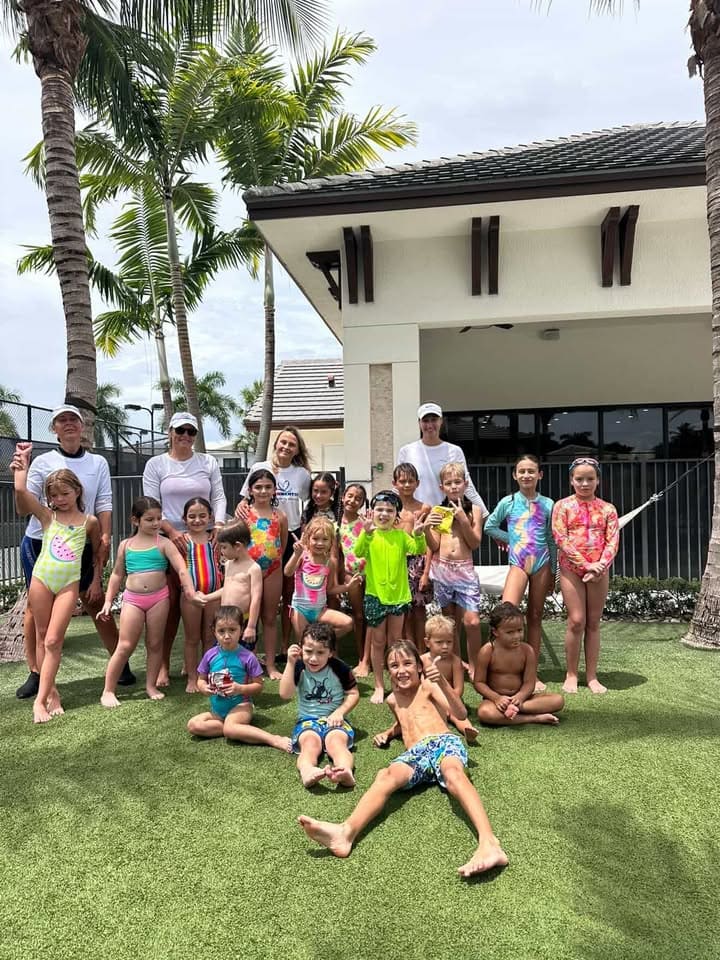
And one more important plus — we come to people ourselves, work all across South Florida. And in today's pace of life, that's honestly very convenient. Parents don't need to drive anywhere, sit in traffic, wait at the pool, and rearrange their whole day around the commute. Just bring your child to your community pool or home pool — and calmly go about your business while your child trains. For modern families, that's a huge advantage.
— What Miami areas would you call strong for kids' swimming?
I'd answer honestly here: for me the question isn't which area is "stronger" but what goals the family has.
We work across a pretty large territory — on both coasts. On the east coast, that's Miami to West Palm Beach, on the west — Sarasota to Tampa. So I see very different parents, very different families, and very different requests.
But I moved away from the idea long ago that swimming is only about results, medals, and stopwatch times. There are competitive schools for that, and if a family is interested specifically in speed and competition, I can honestly direct them there.
I have different goals. I work through water on a person's quality of life. I teach feeling your body, loving movement, relaxing, enjoying water, maintaining physical fitness, and building swimming into your life as a healthy habit. For me, it's important that a child or adult doesn't just "know how to swim" but truly feels confident and free in water.
So I wouldn't single out any areas as "best" or "worse." Strong in kids' swimming for me isn't geography — it's families who understand that water isn't only sport, but safety, health, and quality of life.
Parents' Fears
— Child is afraid of water — is this a death sentence or can it be fixed, and how?
No, it's not a death sentence. And I'd remove the drama here entirely. Fear of water isn't "bad child," not a "difficult case," and not a reason to give up on swimming. It's just a signal: the child and water haven't built a relationship yet.
And here's what's very important to understand: kids don't fear water "just because." There's almost always a reason behind it. Sometimes it's negative past experience — they got scared, dunked suddenly, rushed, weren't given a sense of safety. Sometimes the child is just very sensitive in their nervous system and needs more time to adjust to a new environment. And sometimes parents themselves are so afraid of water that the child picks it up physically faster than through words.
But the good news is water fear works through beautifully if you do it right. Not through pressure, not through "let them cry and they'll get used to it," not through battle of wills. But through gradually building trust. First the child needs to feel: water isn't a place where they're broken, but a place where they're safe.
I always say: you can't force a child to fall in love with water. But you can step by step make it so it stops being a threat to them. First we remove anxiety, then we spark interest, then contact with water appears, and only after that — skill.
And yes, this is fixable. It's just fixed not through "toughness" but through quality coaching work and the right lesson atmosphere.
— Parents often ask: "Isn't it too early?" — what's your answer?
I'd say this: the point isn't when we start, but how we start.
Because water itself doesn't hurt a child. It all depends on approach. If you blow in a baby's face saying "Attention, diving" — that's definitely not our format. Those methods maybe worked decades ago, but today's kids are different. They have different sensitivity, different nervous system, different perception rhythm.
That's exactly why all our coaches are constantly in training and work completely differently: through safety, connection, gradualness, and respect for the child.
Every age has its own tasks in water. With infants — it's gentle body activation, brain-movement connection, trust in water. With older toddlers — safety, coordination, play, confidence. From 3 and beyond — more conscious skill acquisition. So I wouldn't frame the question as "too early?" — I'd look at how skillfully and gently the child is being introduced to water.
— What if a child went for a month and says they don't want to anymore?
First, don't panic and don't conclude "well, swimming isn't their thing." One month isn't remotely the timeframe to understand a child's relationship with water, body, and learning process.
Second, you need to honestly look at why exactly they don't want to. Because the phrase "I don't want to" in kids can mean very different things. They might be scared. Might be tired. Might not understand what's expected of them. Might not feel connection with the coach. Might be cold. Might be overloaded. Might just not like the format they were put in.
And here it's important for parents not to dismiss this "I don't want to" but also not to immediately run and quit everything. You need to figure out the reason.
I'd look at several things: does the child not want water specifically or not want this specific coach; do they come out of lessons tired but happy — or tense and irritated; do they resist before the lesson but then engage — or suffer the whole time; did interest disappear after some specific moment or was it like this from the start.
If a child went for a month and doesn't want to, this very often means the format didn't fit. Maybe they're not ready for group. Maybe they need individual approach. Maybe too much pressure. Maybe the coach works through demands rather than connection.
I would never advise parents to just push through with "you have to." Especially with water. Because if you break down resistance for too long, you can end up with not a skill but lasting aversion.
But just walking away after the first "I don't want to" isn't always right either. Sometimes you need to change coach, format, pace, goals — and the child opens up completely differently.
My main marker here: after lessons, the child should have a smile on their face and the feeling "I did it," not the feeling "I survived." If that's not there, something in the process is off.
How to Choose a Coach
— What signs tell a parent the coach is good — already at the first lesson?
You can spot a good coach very quickly. Not by fancy uniform, not by loud voice, not by how impressively they stand poolside. You see a good coach through the child.
I understood this very well early in my work here. I remember one mom who, seeing me, immediately went to complain to management saying "And this is our coach?" — even though I hadn't even started the lesson yet. She just thought I looked too young. The irony is she was younger than me, and nowhere near my experience working with kids. That's when I was convinced once again: parents very often first look at external impression, not substance. But in our profession, what matters isn't age or how "impressive" someone looks poolside. It's something completely different.
If at the first lesson the coach can establish contact, doesn't pressure, doesn't rush, senses the child's state and adapts the lesson to them rather than trying to force results at any cost — that's a good sign. If after the lesson the child comes out not broken, not tense, not in hysterics, but with a sense that they accomplished something, the coach is working right.
I always look at several things. A good coach: can quickly build rapport with a child; loves children, not just "can work with them"; can set personal boundaries; is simultaneously kind, fun, and lively but also appropriately firm; can build discipline through authority, not suppression; doesn't drag a child where they're not ready; explains through play, imagery, and body, not just commands; sees not only behavior but the cause: fear, tension, mistrust, perception peculiarities; doesn't put on a show for the parent but builds real learning.
And here I'll say straight: don't look for a coach who breaks a child for quick results. If in one lesson they show you "Look, they're already diving" — but the child is in shock, in tears, and then doesn't want to go to the pool, that's not success. That's just violence beautifully packaged as "methodology."
For me, a good coach is someone who understands that water for a child should become a place of power, not a place where they're suppressed.
— What certifications and qualifications should a kids' swim coach have in Florida?
Every school, pool, and program can have its own certification requirements. But there's a baseline without which I wouldn't even consider a coach for working with kids. First and foremost, CPR / First Aid / AED — these skills must be mandatory. This is a question not of prestige but safety.
I always consider additional education related to body and child development a big plus. For example, knowledge in movement therapy, motor development, working with coordination, breathing, sensory processing. Because it's one thing to just teach movements in water, and completely different to understand how a child develops physically and why something isn't working for them.
But I'd say even more important: certificates are baseline, not talent guarantee. Papers are absolutely necessary. Safety is non-negotiable. But a certificate by itself doesn't make someone a strong kids' coach.
Because you can have all the documents and still not feel the child, not understand child development, work with outdated methods, and not know how to build trust. So I always advise parents to look at two things simultaneously: does the coach have professional baseline and necessary certifications; can they actually work with children — gently, precisely, and with respect for their psyche and body.
All our coaches, for example, are constantly in training because I don't believe in the approach "got a certificate many years ago — that's enough." Today's kids are different. And methods that worked in the '80s very often just don't fit today.
— Red flags — when you should definitely leave a coach?
Here I wouldn't be polite at all. There are things where you need to leave immediately.
Red flags for me: coach works through fear, pressure, and suppression; child is dunked abruptly, dragged into deep water, or forced to do what they're not ready for; coach ignores crying, panic, and severe tension; all logic is built on "They'll get used to it"; they can't properly explain to the parent what and why they're doing; coach is more interested in showing quick effect than building skill; coach has no clear safety baseline; child after lessons becomes not more confident but increasingly tense and starts fearing water more than before lessons started.
I'd add one more important marker: if after several lessons you see the child isn't just tired but losing trust, that's already a warning sign. Because being tired after a good lesson is normal. But shutting down, freezing up, fearing the coach or the pool itself — no.
And second point: if the coach bets only on external result — "look, already swimming" — but the child has no proper breathing, no balance, no calm in water, it means foundation isn't being built. And without foundation, everything falls apart later.
I really think parents should look not only at what the child does in water but what state they come out in. If after a lesson there's more confidence in them, more interest, more sense of "I can" — you're in the right place. If more stress — leave.
Pricing and Reality
— What does kids' swimming cost on average in Miami — group and private lessons?
If we're talking market average, group lessons usually cost $25–40 per lesson, and private $60–90, depending on package, format, and conditions.
But I'd look not only at price here. Much more important is understanding what exactly the service includes. Because price itself doesn't always have deciding significance. For very many families, quality matters more: how many kids in the group, how engaged the coach is, does the program adapt to the child, what atmosphere the lesson happens in, and what result the family gets ultimately.
Our group lessons are $40, but this format has a big advantage: parents don't need to drive kids anywhere. We conduct lessons right in the community where the child swims with their neighbors and friends. We have mini-groups of just 3–5 people, and this format works great for very many families: child is comfortable, familiar environment, small number of kids, yet good group dynamic.
Private lessons are $70, and here the program adapts specifically to each child: their age, level, fears, body peculiarities, and specific goals.
So I'd advise parents to choose not by "where's cheaper" principle but by "where's better quality service and what's included" principle.
— How often do you need to practice to see results — and what is "result" for a 5-year-old?
I'd say this: every age has its own result. You can't measure all kids with one ruler. What's already big success for one age is just baseline for another. So it's very important to understand what task the child should solve at their specific developmental stage.
If we're talking about a child who's ready for more conscious swimming, then for me a good result is when they feel like a fish in water. When they can swim across the pool, take a breath, flip from back to front and back, can rest on water, feel water with their body, and understand how to work both underwater and on surface. That's when we can really say the child doesn't just "do something in the pool" but knows how to swim quality and consciously.
If we're talking about lesson frequency, for most kids a good rhythm is 2 lessons per week. If you need to remove fear faster, advance in skill, or work specifically on technique, then a combination of group and private lessons works well.
I really think that in swimming, regularity and quality matter more than just quantity. Better to practice consistently and in the right format than chaotically without system.
And it's important to understand one more thing: swimming isn't only about staying afloat skill. It affects practically all body systems, helps a child develop symmetrically because all muscle groups work simultaneously without overloading joints. Swimming improves coordination, breathing, endurance, posture, body awareness, helps release excess tension, and overall forms a completely different relationship with their body in the child.
So for me, result isn't only meters and technique. It's also how the child moves, how they breathe, how confident they are, how freely they feel their body, and how organically water becomes part of their life.
This material was prepared and co-authored by Anastassiya Gainullina for parents who want to make informed choices about swimming for their children. If you have questions — ask them in the comments.