
How to Protect Your Kids from Florida's Sun and Heat: A Practical Parent's Guide
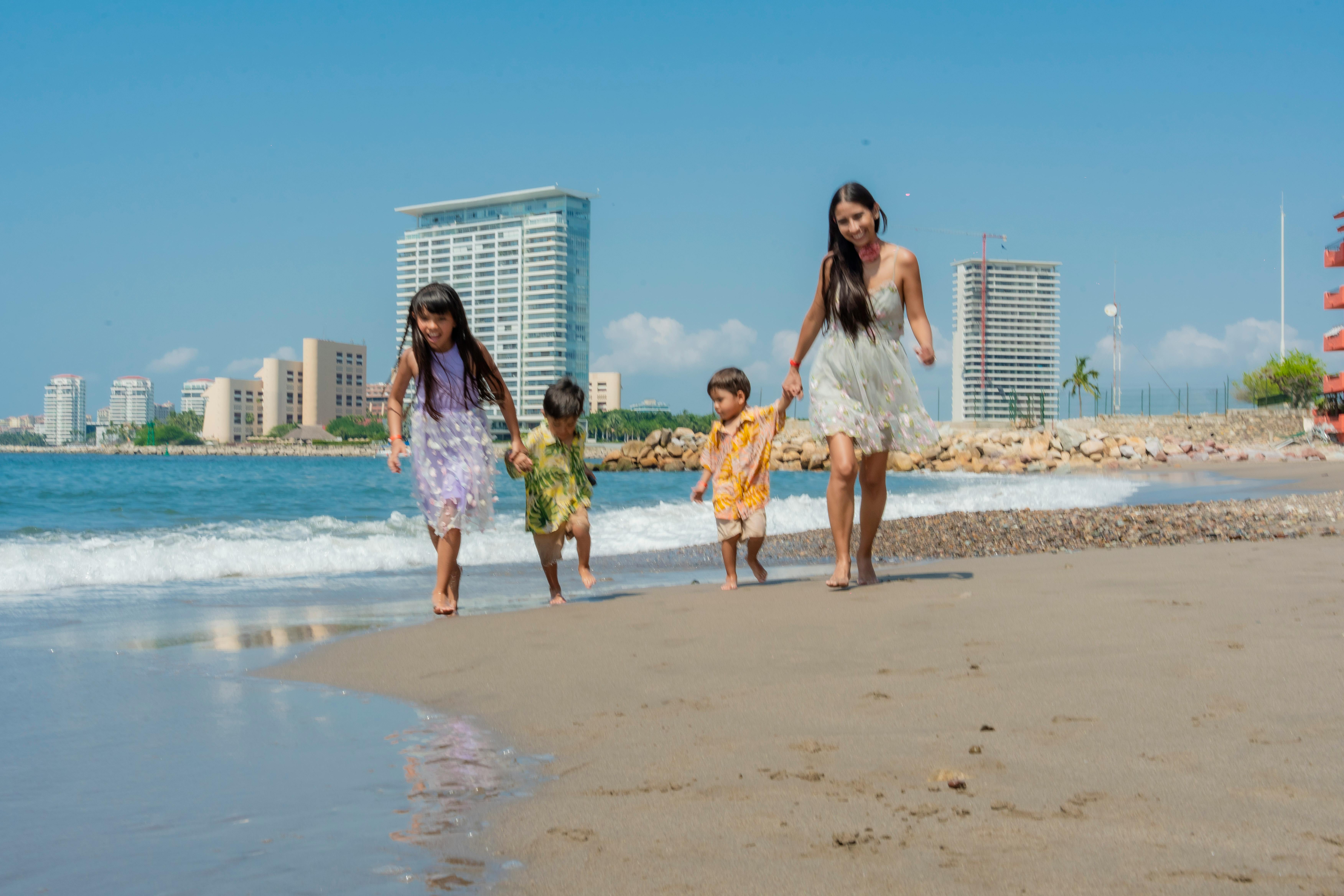
Florida sunshine is one of the things we love most about living here. But as any South Florida parent knows, that same sunshine can turn into a serious hazard — fast. Here's everything you need to know to keep your kids safe, comfortable, and still having the best summer ever.
Why Florida's Sun Hits Different
Let's be honest: Florida isn't just "sunny." It's a whole different level.
Summer temperatures regularly hit 90°F+, and with the humidity factored in, it can feel like 105°F. That combination — intense UV rays, high heat, and thick humidity — puts extra stress on little bodies that already struggle to regulate temperature as efficiently as adults do.
Here's the number that should make every parent pay attention: up to 80% of lifetime skin damage from sun exposure happens during childhood. That's not a reason to keep kids indoors — it's a reason to get strategic about how they go outdoors.
And in Miami-Dade, Broward, and Palm Beach counties, UV levels are high even on overcast days. Concrete, sand, and water all reflect UV rays, amplifying exposure even when your child isn't in direct sunlight.
Bottom line: sunscreen alone isn't enough. You need a system.

The Real Risks: What to Watch For
Before we get into solutions, it helps to know what you're protecting against:
Sunburn — It only takes 15–30 minutes of unprotected exposure during peak hours for a fair-skinned child to burn. And sunburns in childhood significantly increase the lifetime risk of skin cancer.
Heat exhaustion — Signs include weakness, dizziness, nausea, headache, pale clammy skin, and heavy sweating. This is your body saying get me out of here.
Heat stroke — A medical emergency. Look for a high body temperature, confusion, rapid heart rate, and the absence of sweating despite the heat. Call 911 immediately.
Flare-ups of chronic conditions — Heat and sun exposure can worsen asthma, cardiovascular conditions, and skin disorders like eczema.
The Golden Rules (According to Pediatricians)
The American Academy of Pediatrics breaks sun safety into five clear principles — and they apply especially hard in Florida's climate:
1. Babies under 6 months: shade only. Their skin is too sensitive for sunscreen and for direct sunlight. Stick to shaded strolls, lightweight cover-ups, and a wide-brimmed hat. Full stop.
2. Clothing and shade first, sunscreen second. For kids over 6 months, physical barriers come before sunscreen — not instead of it. Think of sunscreen as the last line of defense, not the only one.
3. Avoid peak hours. The UV index spikes between 10 AM and 4 PM. Plan outdoor time around that window — more on this below.
4. Hydrate constantly. Kids don't always feel thirsty until they're already dehydrated. Offer water before, during, and after outdoor play — every 15–20 minutes during active time.
5. Know the signs of overheating. Fussiness, flushed skin, reduced urination, and no sweating despite the heat — any of these means it's time to head inside immediately.
The Smart Summer Schedule: Timing Is Everything
This is the single biggest game-changer for Florida families. When your kids are outside matters more than almost anything else.
✅ Before 10 AM — Go for it
The "golden window" for outdoor play. Parks, beaches, playgrounds, bike rides — this is your time. Many South Florida families make this their most active block of the day.
🚫 10 AM – 4 PM — Move it inside
This is when UV is at its most intense. Plan indoor activities: children's museums, libraries, indoor play centers, art studios, swimming at covered pools. A lot of great Miami-area venues are perfectly designed for this exact window.
✅ After 4–5 PM — Back outside
The sun softens, temperatures start dropping (slightly), and outdoor time becomes pleasant again. Evening walks, backyard play, and neighborhood bike rides all work great here.
Pro tip for Miami and Broward parents: Check the UV index before heading out. Any reading of 3 or above means your child needs full protection. In South Florida in the summer, that's basically every day.
Shady Playgrounds: What to Look For (and How to Make Any Playground Work)
Choosing a shaded playground in Miami or Hollywood can genuinely make or break your morning. Here's what to look for:
Permanent shade structures — Canopies, awnings, and mature trees that cover the actual play equipment (not just a bench nearby) make a huge difference.
Surface material — Rubber and artificial turf absorb heat and can get hot. Playgrounds with natural ground covering or grass are more comfortable earlier in the day. Check before the kids kick their shoes off.
Water access — A drinking fountain or water bottle fill station nearby isn't a luxury in Florida. It's a safety feature.
DIY shade upgrades for any spot:
- Pack a pop-up beach tent or large umbrella — they set up in minutes and create your own shaded zone
- Bring a light blanket to throw over hot swing seats or sandbox edges
- A battery-powered mini fan (or a stroller fan) can make a surprising difference
- Cooling towels — wet them, drape around the neck — kids love them and they genuinely help

What to Actually Dress Your Kids In
Here's the irony most parents don't realize: a light, long-sleeved shirt often protects your child better than sunscreen alone — and it never needs to be reapplied.
The basics:
- Light colors, not white. Lighter colors reflect solar heat. White can be surprisingly see-through when wet.
- Breathable fabrics. Lightweight cotton or linen-blend fabrics let skin breathe and don't trap heat the way synthetic fabrics do.
- More coverage = more protection. A long-sleeve rash guard at the beach or pool covers a lot of territory and removes a lot of guesswork.
- UPF-rated clothing has a built-in UV protection factor — great for beach days and anything water-related.
Hats:
- A wide-brimmed hat (3+ inches all around) protects the face, ears, and neck — not just the top of the head.
- Legionnaire-style hats with a neck flap are great for toddlers.
- A standard baseball cap leaves ears and the back of the neck exposed.
Sunglasses:
Kids need real UV protection, not just cute frames. Look for sunglasses labeled 99–100% UVA and UVB protection. Wraparound styles that stay on active little faces are worth every penny.
Sunscreen: The Full Breakdown
What to use
The AAP recommends broad-spectrum sunscreen (UVA + UVB) with SPF 30 or higher for children over 6 months. For sensitive skin — especially common in Florida's heat — look for mineral formulas with zinc oxide or titanium dioxide. They're gentler, less likely to sting eyes, and work well on kids with eczema or reactive skin.
How to apply it (and where people go wrong)
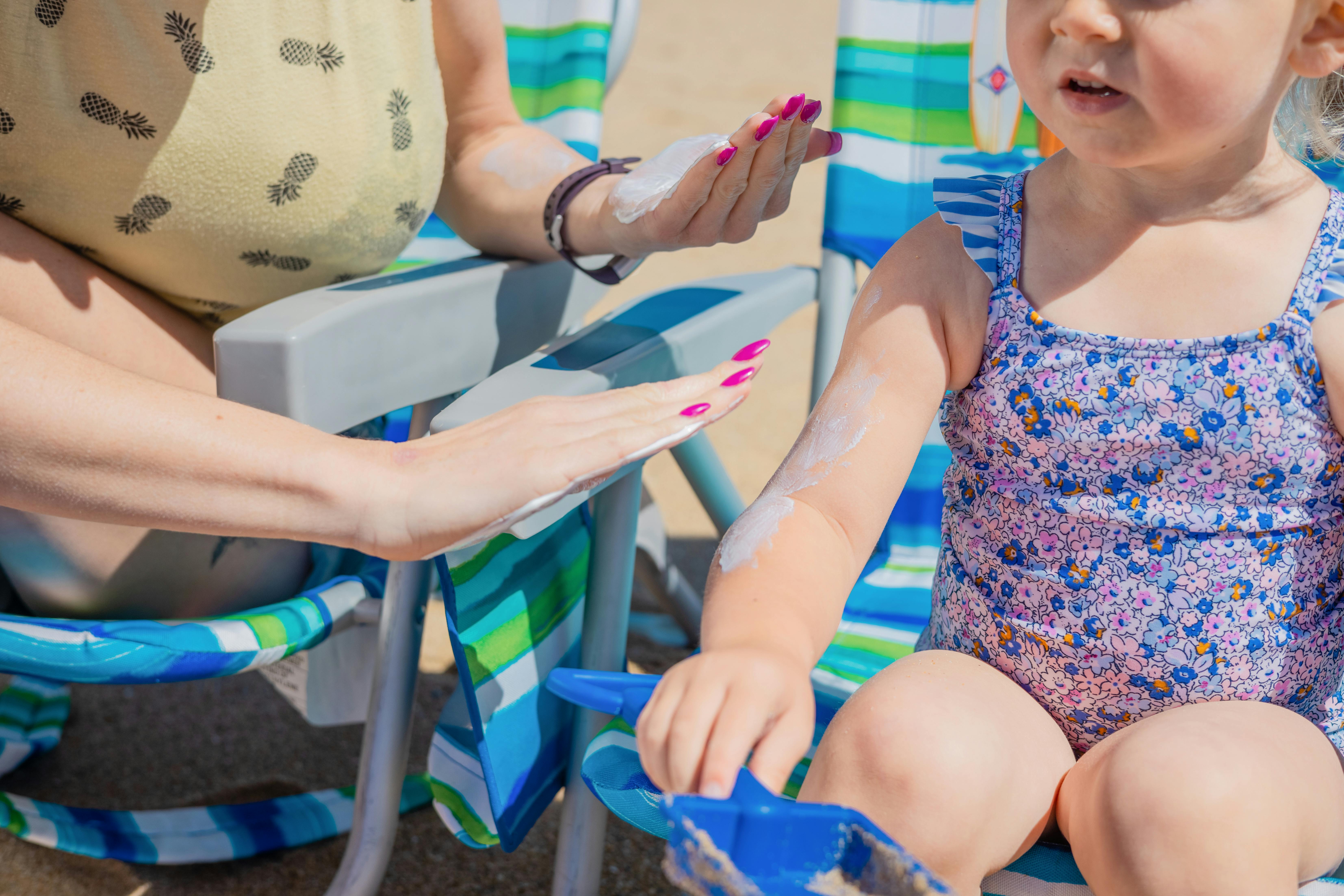
- Apply 15–30 minutes before going outside — not in the parking lot
- Use more than you think — about a tablespoon for a small child's body (most people use far less than needed)
- Reapply every 2 hours, and immediately after swimming, sweating, or towel drying
- Don't skip the easy-to-miss spots: ears, back of the neck, tops of feet, back of the knees, and under bathing suit straps
Age-specific notes:
Under 6 months: Skip sunscreen. Keep them in shade and covered clothing. If you absolutely cannot avoid sun exposure, apply a tiny amount of mineral sunscreen to the exposed areas only (face, back of hands) — but avoidance is always the first choice.
6 months – 2 years: Stick to mineral formulas. Patch test on a small area first to check for reactions.
Hydration in Florida Heat: It's More Important Than You Think
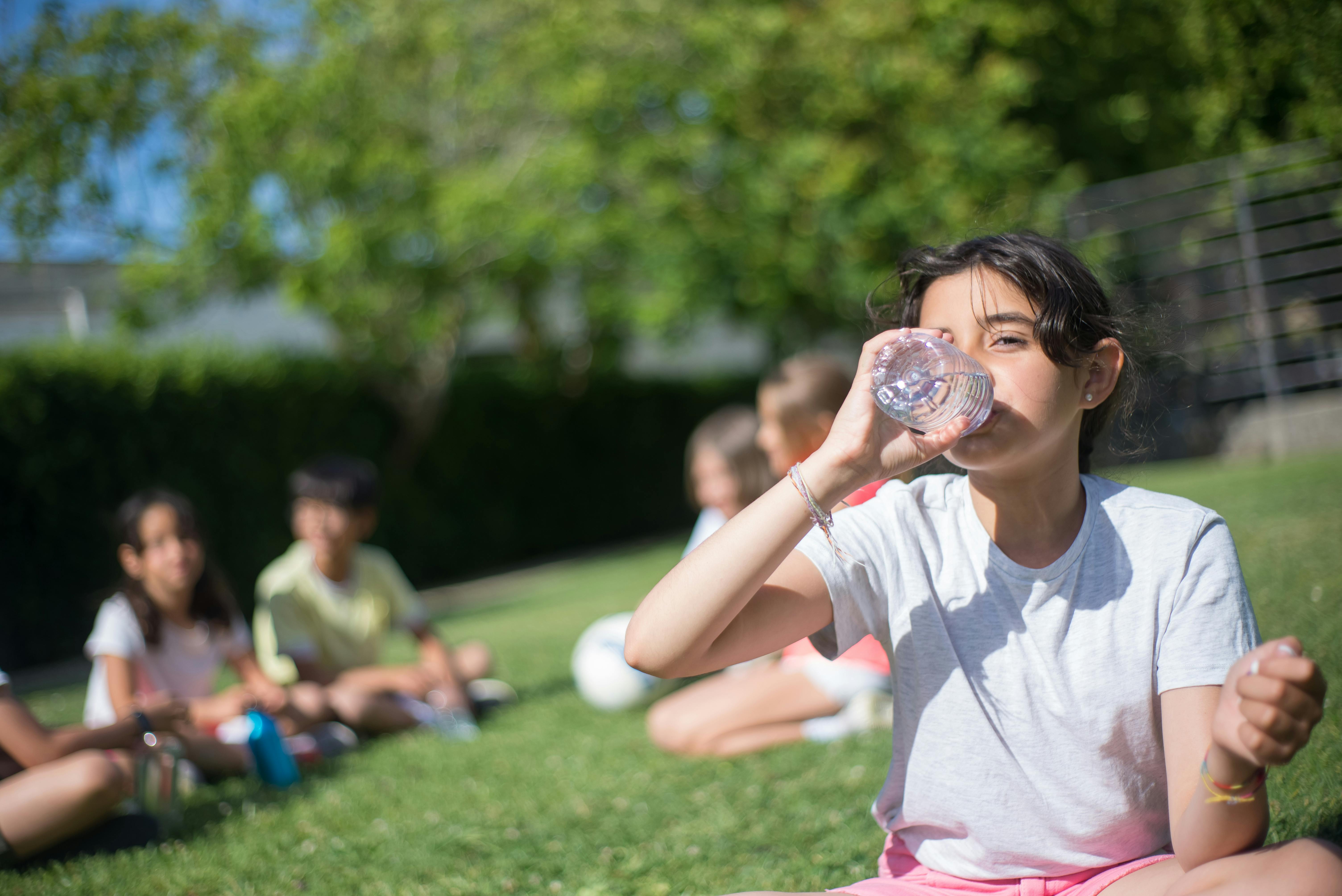
In South Florida's humidity, kids can lose water faster than they realize — and the thirst sensation often lags behind actual dehydration.
Practical hydration tips:
- Offer water every 15–20 minutes during outdoor play — don't wait for "I'm thirsty"
- Timed water bottles (with time markers on the side) are a genuinely helpful trick — kids respond well to the visual goal
- Avoid sugary drinks and juice as the primary hydration — they can actually worsen dehydration and cause blood sugar crashes
- Pack water-rich snacks: watermelon, cucumber slices, strawberries, citrus. They count toward hydration and kids actually want to eat them
Real Florida Parent Hacks
These aren't from any official guideline — they're from actual South Florida families who figured out what works:
The "playground kit" in the car — A foldable umbrella, cooling towel, extra water bottle, and a snack that doesn't melt. Always in the car, ready to go.
The frozen water bottle trick — Freeze half a bottle of water overnight. Top it off in the morning. Your kid stays cold longer than with a regular water bottle.
Two outfits for toddlers — Bring a dry change of clothes. After active play and sweating, a dry outfit prevents the shock of walking into an air-conditioned car or store.
Beach before 10, nothing after — Many South Florida families treat the beach as a morning-only activity. Get there at 7:30, leave by 10:30. Best of both worlds.
One adult, one child — In big groups at the beach or pool, assign specific kids to specific adults before you arrive. In the heat, kids get tired and cranky faster and drift further.
Common Mistakes (That Are Really Easy to Make)
Relying only on sunscreen. At high UV levels, sunscreen without physical protection isn't enough on its own.
Outdoor sports at noon. Soccer practice, long bike rides, or any vigorous activity during peak hours significantly increases heat illness risk — even for healthy kids.
Synthetic or tight clothing. It traps heat and leads to overheating and skin irritation.
Juice instead of water. Juice feels hydrating but can contribute to dehydration and energy crashes.
Leaving a child in the car "for a minute." In Florida, a car can reach dangerous temperatures in under 10 minutes — even on a mild day, even with the windows cracked. Never.
Quick-Reference: Sun Safety Cheat Sheet for South Florida Parents
| Situation | What to Do |
|---|---|
| Under 6 months old | Shade only, no sunscreen, lightweight cover-up |
| 6 months – 2 years | Mineral SPF 30+, wide-brim hat, limit peak hours |
| Beach day | Before 10 AM, UPF swimwear, reapply sunscreen every 2 hours |
| Playground midday | Choose shaded options, bring tent/umbrella, water every 20 min |
| Signs of heat exhaustion | Move to shade/AC, cool water, contact pediatrician if no improvement |
| Signs of heat stroke | Call 911 immediately |
FAQ: What South Florida Parents Actually Ask
Can we be outside in the middle of the day if there's shade? Deep shade + ventilation + light clothing + water reduces the risk significantly. But even in shade, scattered and reflected UV rays still reach skin during peak hours. Limit these sessions and layer protection with clothing and sunscreen.
How fast does a car heat up? In Florida, interior car temperature can rise 10°F+ in just 10 minutes, even on a mild day. Never leave a child alone in a parked car. Not for a quick errand. Not even with the window cracked.
Do I still need sunscreen if my child is wearing UPF clothing? UPF clothing covers what it covers. Any exposed skin — face, hands, feet, neck — still needs sunscreen. Don't forget to reapply throughout the day.
Can I use my regular adult sunscreen on my child? A broad-spectrum SPF 30+ adult formula will protect the skin, but for young children, especially those with sensitive skin, mineral formulas without fragrances or dyes are a safer bet. When in doubt, check with your pediatrician.
Looking for shaded playgrounds, indoor activity centers, and family-friendly spots across Miami-Dade and Broward? Browse our curated directory at familyguideusa.com — every listing is verified by real South Florida parents.
Sources: American Academy of Pediatrics · CDC Heat Health · EPA Children's Health · Florida pediatric clinics · HealthyChildren.org